
Turning 30 doesn’t suddenly make your body forget how to lose weight. But something does change. Your routine. Your hormones. Your muscle mass. And, quite often, the way you eat.
You may notice that the same diet that worked beautifully at 25 barely moves the weighing scale at 32. That extra few kilos around the waist seem stubborn, your energy dips sooner, and skipping dinner no longer feels like a clever weight-loss trick. Frankly, weight loss after 30 requires a little more strategy and a lot less punishment.
The good news? You don’t need to survive on salads.
Why Does Weight Loss Become More Difficult After 30?
As we age, muscle mass can gradually decline, especially when strength training and adequate protein aren’t part of the routine. Since muscle tissue uses energy, having less of it can affect your daily calorie expenditure.
Then there’s lifestyle.
At 25, you might have walked everywhere, stayed up late and somehow survived on coffee and sandwiches. At 35, you may spend eight hours at a desk, drive home, order dinner because you’re exhausted, and realise you’ve barely moved all day.
Small changes. Big difference.
This is where nutrition habits need to evolve.
1. Stop Treating Breakfast as Optional
Skipping breakfast isn’t automatically bad, but replacing a balanced meal with three cups of tea and a biscuit isn’t exactly helping your body.
Try building breakfast around protein, fibre and healthy carbohydrates. Think eggs with roti, vegetable poha with curd, besan chilla, or oats topped with nuts and seeds.
The goal isn’t a complicated diet chart. It’s a meal that keeps you satisfied instead of sending you hunting for snacks at 11:30 a.m.
2. Give Protein More Attention
This becomes increasingly important after 30.
Include practical sources such as dal, paneer, curd, eggs, chicken, fish, soy or beans depending on your dietary preferences. Protein can support muscle maintenance and help you feel fuller between meals.
And no, you don’t need a giant shaker bottle sitting permanently on your office desk.
Food comes first.
3. Don’t Fear Carbohydrates
Many people approaching their 30s decide that weight loss means eliminating rice, roti or potatoes. That’s usually unnecessary.
The smarter approach is portion control and better combinations. A plate containing vegetables, protein, dal and a sensible portion of roti or rice is very different from eating three oversized portions while barely touching vegetables.
Balance beats banning.
4. Watch the “Healthy” Extras
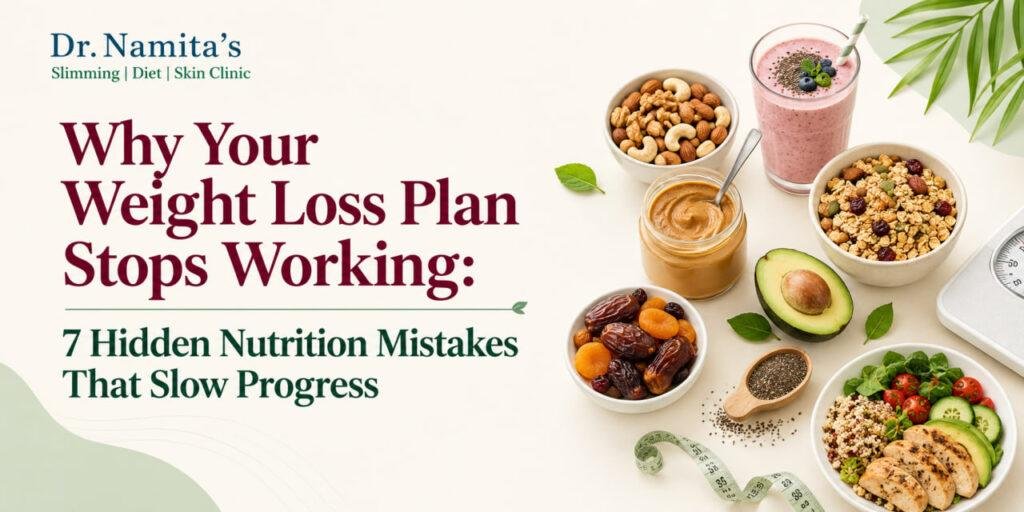
Nuts. Granola. Smoothies. Peanut butter.
Healthy foods can still contribute significant calories when portions quietly creep upward. A handful of nuts can become three handfuls while you’re answering emails. It happens.
Pay attention to quantity, not just food labels.
5. Build Meals You Can Actually Repeat
This is where personalised nutrition makes a difference. A diet plan that looks impressive on paper but doesn’t fit your work schedule, family meals or food preferences won’t last very long.
Dr Namita Nadar focuses on practical nutrition approaches that can fit into everyday routines rather than turning every meal into a mathematical exercise.
Because sustainable weight management isn’t about eating perfectly for ten days.
It’s about eating sensibly for months.
If you’re experiencing weight loss after 30, don’t immediately assume your body is “working against you.” Look at your protein intake, portions, movement, sleep, meal timing and overall routine first.
Thirty isn’t the problem.
Your old habits may simply need an update.