
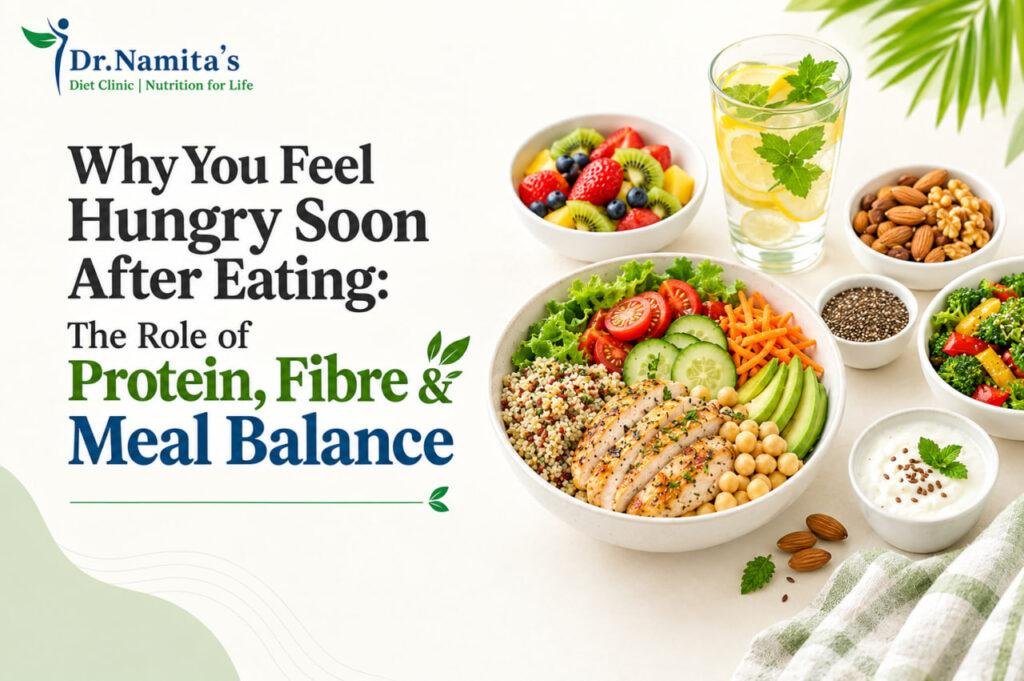
You just ate.
You’re full.
Or at least, you thought you were.
Then, an hour later, your stomach starts making demands again. Maybe you reach for biscuits with your tea. Maybe there’s a quick handful of namkeen sitting on the kitchen counter. Sometimes, you aren’t even physically hungry—you simply feel like eating something.
So, what’s going on?
The answer often has less to do with how much you eat and more to do with what is actually on your plate.
A meal loaded with refined carbohydrates but lacking protein and fibre can leave you satisfied for a short while, only to bring hunger knocking again soon after. Think of a breakfast consisting of two slices of white bread and sweet tea. It may fill your stomach, but it doesn’t necessarily provide the combination your body needs for lasting satiety.
This is where meal balance matters.
Protein: The Missing Piece on Many Plates
Protein isn’t just for gym-goers or bodybuilders. Your everyday meals need it too.
Protein can help you feel fuller for longer because it takes more time to digest and can influence hormones involved in appetite regulation. When your meals consistently contain too little protein, you may find yourself hunting for snacks despite having eaten recently.
And no, that doesn’t mean every meal needs a complicated protein shake.
Indian kitchens already have plenty of options—dal, paneer, curd, milk, eggs, soy, sprouts, chickpeas and other legumes can all contribute protein to a balanced meal.
A protein-rich diet for weight loss isn’t about eating enormous portions of protein. It’s about making protein a regular part of your meals rather than treating it as an afterthought.
For example, instead of having a bowl of poha by itself, you could pair it with curd or add sprouts, peanuts or another suitable protein source. Small changes. Big difference in how that meal behaves.
Fibre Keeps Your Meal Working Longer
Now let’s talk about fibre.
Fibre is found naturally in vegetables, fruits, whole grains, legumes, nuts and seeds. Because many high-fibre foods take longer to chew and digest, they can contribute to feelings of fullness.
Here’s a simple comparison.
A glass of fruit juice can disappear in minutes. An orange takes longer—you peel it, chew it, and consume the whole fruit along with its fibre.
That difference matters.
Adding vegetables to lunch, choosing whole grains when appropriate, including salads, eating whole fruits and using beans or legumes regularly can make meals more satisfying without simply piling more food onto the plate.
The Real Problem May Be Your Meal Balance
Sometimes the issue isn’t protein alone. Or fibre alone.
It’s the combination.
Imagine a typical plate dominated by rice or roti, with barely any dal and a token spoonful of vegetables pushed to the side. You may have eaten enough calories, but the meal may still lack the structure that helps you stay satisfied.
A better-balanced plate generally includes a sensible source of protein, plenty of vegetables or other fibre-rich foods, an appropriate carbohydrate portion and some healthy fat, depending on your individual nutritional needs.
That’s the kind of practical approach Dr Namita Nadar focuses on—diet plans shouldn’t feel like punishment or require you to abandon familiar Indian food. The goal is to understand your meals and make them work better for your body and lifestyle.
What If You’re Still Hungry?
Don’t automatically blame yourself.
Persistent hunger can have several causes, including inadequate meals, poor sleep, stress, dehydration, long gaps between meals or certain medical conditions. If you’re constantly hungry despite eating balanced meals, it’s worth discussing your pattern with a qualified nutrition professional rather than simply cutting calories further.
Because eating less isn’t always the answer.
Eating smarter can be.
A sustainable protein-rich diet for weight loss, combined with adequate fibre and well-balanced meals, can help turn those frustrating “I’m hungry again!” moments into something far less frequent.
And that’s a much better place to start than simply telling yourself to stop eating.