
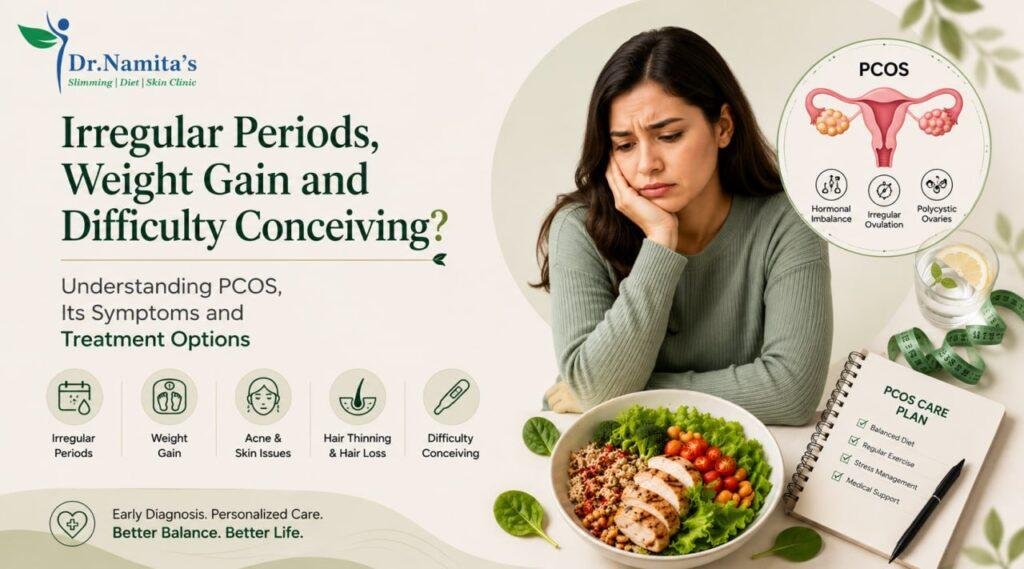
Irregular Periods, Weight Gain and Difficulty Conceiving? Understanding PCOS, Its Symptoms and Treatment Options
Your periods are late. Again.
The weighing scale won’t budge.
And you’ve started wondering why getting pregnant isn’t as simple as everyone makes it sound.
If this feels painfully familiar, you’re not alone. Polycystic Ovary Syndrome (PCOS) affects millions of women, yet many spend years dismissing the warning signs as “just hormones” or blaming themselves for gaining weight despite eating carefully—until the symptoms pile up and demand attention.
PCOS isn’t simply about irregular periods. It’s a hormonal condition that influences the way your ovaries function, your metabolism responds to food, and even how your body uses insulin. That means the effects can show up almost anywhere, from stubborn acne and thinning hair to unexplained fatigue and fertility challenges.
Look, every woman’s experience with PCOS is different. Some skip periods for months. Others struggle with excessive facial hair. Someone else may only discover they have PCOS while trying to conceive. That’s what makes the condition so frustrating—it rarely follows a predictable script.
Common Symptoms You Shouldn’t Ignore
PCOS often develops gradually, making it easy to overlook early signs. Keep an eye out for:
- Irregular or missed menstrual cycles
- Unexplained weight gain, especially around the abdomen
- Difficulty losing weight
- Acne that persists beyond teenage years
- Excess facial or body hair
- Hair thinning or hair loss
- Dark patches around the neck or underarms
- Difficulty getting pregnant
- Mood changes and low energy
Not every woman experiences every symptom. And no, having one or two doesn’t automatically mean you have PCOS. But if several of these sound familiar, it’s worth seeking professional guidance instead of relying on internet myths.
Why Does PCOS Cause Weight Gain?
Here’s where things become a little more complicated.
Many women with PCOS also develop insulin resistance. Think of insulin as a key that’s supposed to unlock your cells so glucose can enter. With insulin resistance, that key doesn’t work as smoothly anymore. Your body compensates by producing more insulin, and those higher insulin levels encourage fat storage while making weight loss feel like climbing a hill with a backpack full of bricks.
Frustrating.
This is exactly why crash diets often fail. Cutting calories drastically may show quick results for a week or two, but the weight usually creeps back because the underlying hormonal imbalance hasn’t been addressed.
Can PCOS Affect Fertility?
Yes, but it doesn’t mean pregnancy is impossible.
PCOS can interfere with regular ovulation, reducing the chances of conception. Some women ovulate only occasionally, while others may not ovulate consistently enough to support a natural pregnancy. The encouraging part? Many women with PCOS go on to conceive successfully after improving their hormonal balance through medical care, lifestyle modifications, and proper nutrition.
Which brings us to the real solution.
Why Nutrition Plays Such a Big Role
Food can’t “cure” PCOS. Not a chance.
What it can do is improve insulin sensitivity, support hormonal balance, reduce inflammation, and make weight management considerably more achievable. Choosing high-fibre foods, lean proteins, healthy fats, seasonal vegetables, whole grains, and balanced meals can make a meaningful difference over time.
The trick isn’t eating less. It’s eating smarter.
Following a personalised PCOS Diet Plan in Noida can help women manage symptoms without depending on unrealistic restrictions or trendy social media diets that disappear as quickly as they arrive.
Expert Guidance Matters
Every woman has different hormone levels, medical history, lifestyle habits, and nutritional needs. That’s why a one-size-fits-all diet rarely works for PCOS.
Dr Namita Nadar believes in creating practical, sustainable nutrition plans that fit real lives—not impossible routines. Whether your goal is managing weight, improving menstrual regularity, supporting fertility, or simply feeling healthier every day, personalised dietary guidance can become a powerful part of your treatment journey.
PCOS may be a long-term condition, but it doesn’t have to control your life. With the right diagnosis, consistent lifestyle changes, and a scientifically designed PCOS Diet Plan in Noida, women can regain confidence, improve their health, and move closer to their family-planning goals. And sometimes, that first step begins with listening to what your body has been trying to say all along.